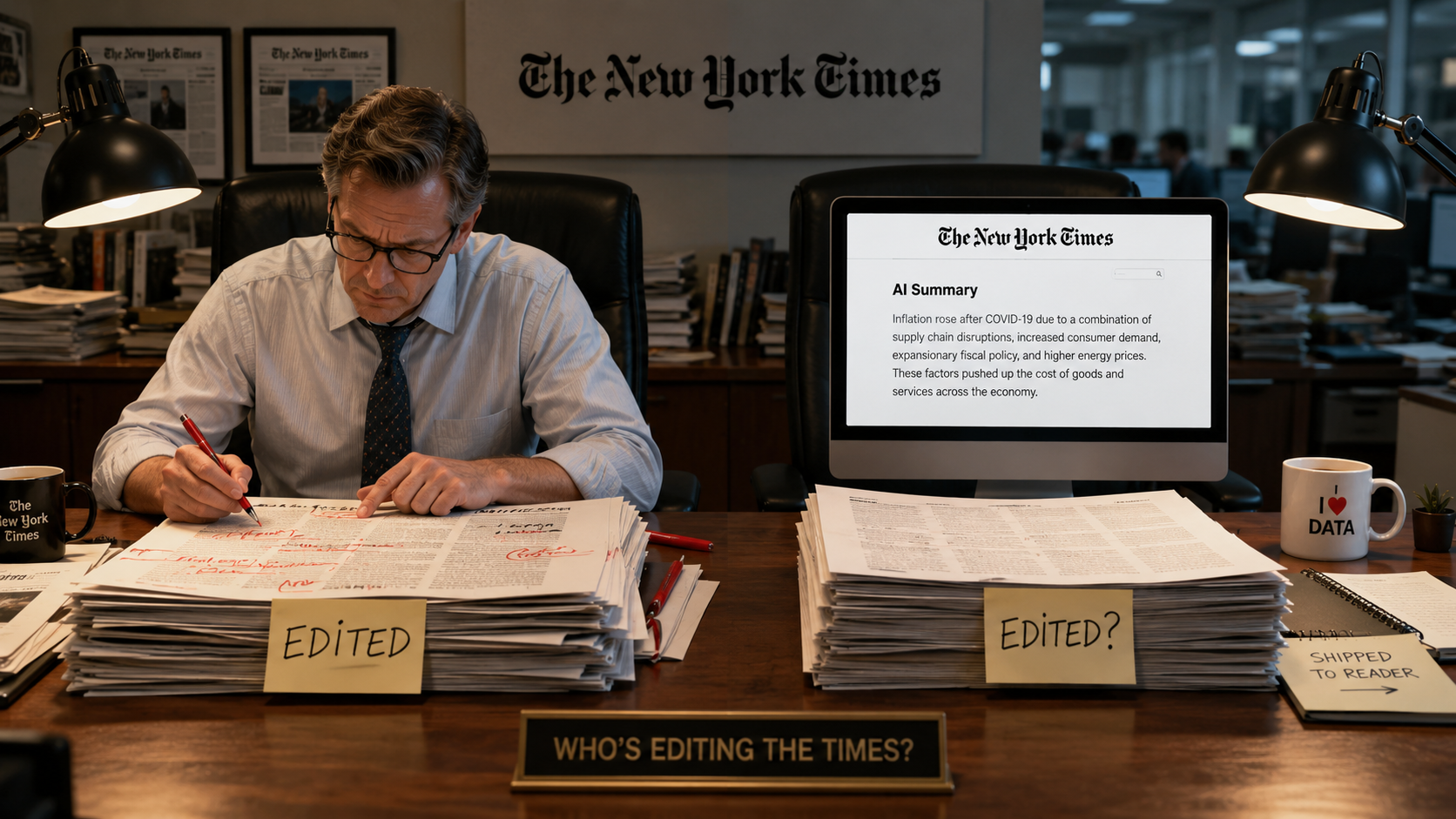
I hear it all the time. AI depends on journalists for the raw material it uses to generate its answers.
At least some of those answers. AI doesn’t rely on journalists to answer questions about Mars, but it does for, say, political stories.
Does it make sense to rely on AI for your daily news?
That reminds me of an earlier transition. Despite warnings from the more traditional crowd, young people moved away from traditional news outlets and started getting their information from Twitter and other online sources. Publishers adjusted and started both publishing to social media and using it as a traffic source for their other outlets.
Are we seeing a new transition to AI?
Maybe, but there’s an important difference. It was still (mostly) humans tweeting all that stuff back then. Now we have the prospect of AI ingesting all the news and re-presenting it as its own content.
Journalists and publishers immediately ask, “If AI is getting its information from journalists, shouldn’t they be compensated?”
Yes – as things stand now – but I want to step back and examine the underlying claim. Does AI actually need journalists? Will it continue to need journalists?
AI doesn’t need articles. It needs information.
Brian Morrisey recently wrote about how AI doesn’t need an article. Rather, it wants the intelligence embedded in the articles. Publishers think they’re making Lego castles. AI wants the bricks.
Let’s apply that to a particular news event. Let’s say there’s a large fire in Baltimore. Twenty years ago, the information chain might have looked like this:
Fire → reporter on the scene → newspaper / radio / TV → consumer
It’s not that the reporter was the only one who saw the fire, or knew anything about it. It’s that he was the only one who had a process and a pipeline to get the information out to the people.
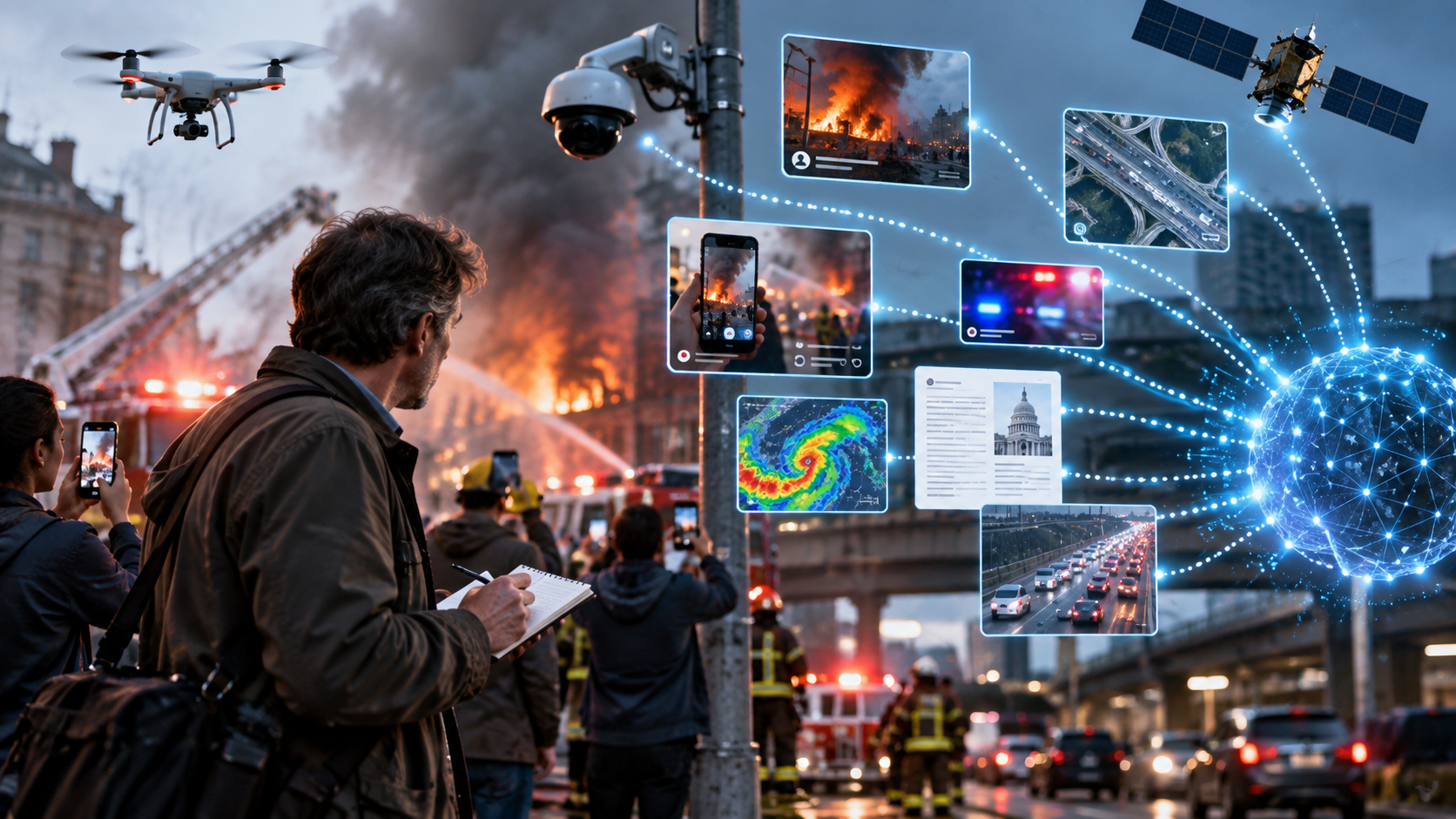
That’s not true anymore. People on the street are tweeting, recording videos, posting to Reddit and NextDoor, etc. The fire department posts an alert. The mayor’s office issues a press release. All those sources and more are available to AI. In fact, you could say that AI has access to far more information than the reporter on the ground.
That’s scary, but it gets worse. What about traffic cameras that show road closures? Can AI get that information? And what happens when AI has access to Flock cameras? What happens when the old “Google Glass” concept comes back and everyone is filming everything all the time? Will the “terms of use” include allowing AI to use that information? (Silly question.)
Reporters have sources, but AI will have millions of sources.
Instead of …
Event → reporter → article → AI → consumer
we could have …
Event → millions of primary sources → AI → consumer
The reporter has been left out of the equation.
We’re not all the way there yet, but this is all technically feasible and not far away.
What happens to journalism?
This doesn’t mean that journalism goes away completely, but it will certainly bring about a huge change.
AI will gather information from these millions of sources and write its own articles, customized to the consumer. At first it might stumble a bit with the reporting, just as it did with six-fingered people. But it will learn to distinguish the reliable from the unreliable, and before long it will be able to create reasonable (or better) reporting on current events.
AI will replace a lot of journalism, but there will be some things it can’t do. It can’t spend six months developing sources inside a government agency to discover that officials have been falsifying records. It can’t provide the human meaning behind the story. It can’t make reliable moral judgments.
On that last point, you’ve heard that when AI plays war games, it’s rather bloodthirsty. It drops the bomb way more often than humans do. That’s because AI doesn’t have grandchildren. It doesn’t live in the real world, and as long as that’s true, humans will need to provide perspective and judgment.
The end of a publisher strategy
This makes me doubt a publisher strategy that I used to advocate. It goes like this.
AI companies need our content. They’re taking our articles without adequately compensating us. Therefore we need to prevent them from accessing our articles.
That was a good strategy — three years ago. We should have starved the beast and insisted on preferable terms while the systems were still in development. Then we’d be in a reasonable bargaining position today. Now it reminds me of closing the barn door after the horses are gone.
Even if we started today (which is impossible) .… Even if every newspaper in the country successfully blocked every AI company from scanning its content, would that prevent AI companies from answering questions about current events?
Of course not.
They would simply move on to other sources, such as government feeds, public records, social media, citizen reports, video, satellite imagery, cameras, sensors ….
Blocking AI from reading articles might win a few digital dimes in the short term (only for big-name publishers), but it’s not a long-term solution. The ugly truth is that AI doesn’t need journalism, and will need it less and less.
What do we do then?
Professional journalism has been one of the primary sources for AI because it could rely on the filters, rules, and best practices journalists have developed over decades. It was easier for the AI to read a newspaper than to try to gather that information itself.
That won’t be true for long. So what will be left?
Original reporting. Uncovering facts people don’t want uncovered. Providing a human point of view.