Bo Sacks distributed an article about the New York Times using AI summaries, which triggered the following thoughts. (Link at the end of this article.)
Suppose I’m a New York Times subscriber who’s wondering why inflation rose after COVID. Here are four possible experiences.
- I type my query into Google search and get links, which include links to the NYT. I choose one and get a NYT-approved article, including their opinion, framing, tone, and judgment.
- I login to the NYT site and use NYT’s search engine, which again gives me a NYT-approved article.
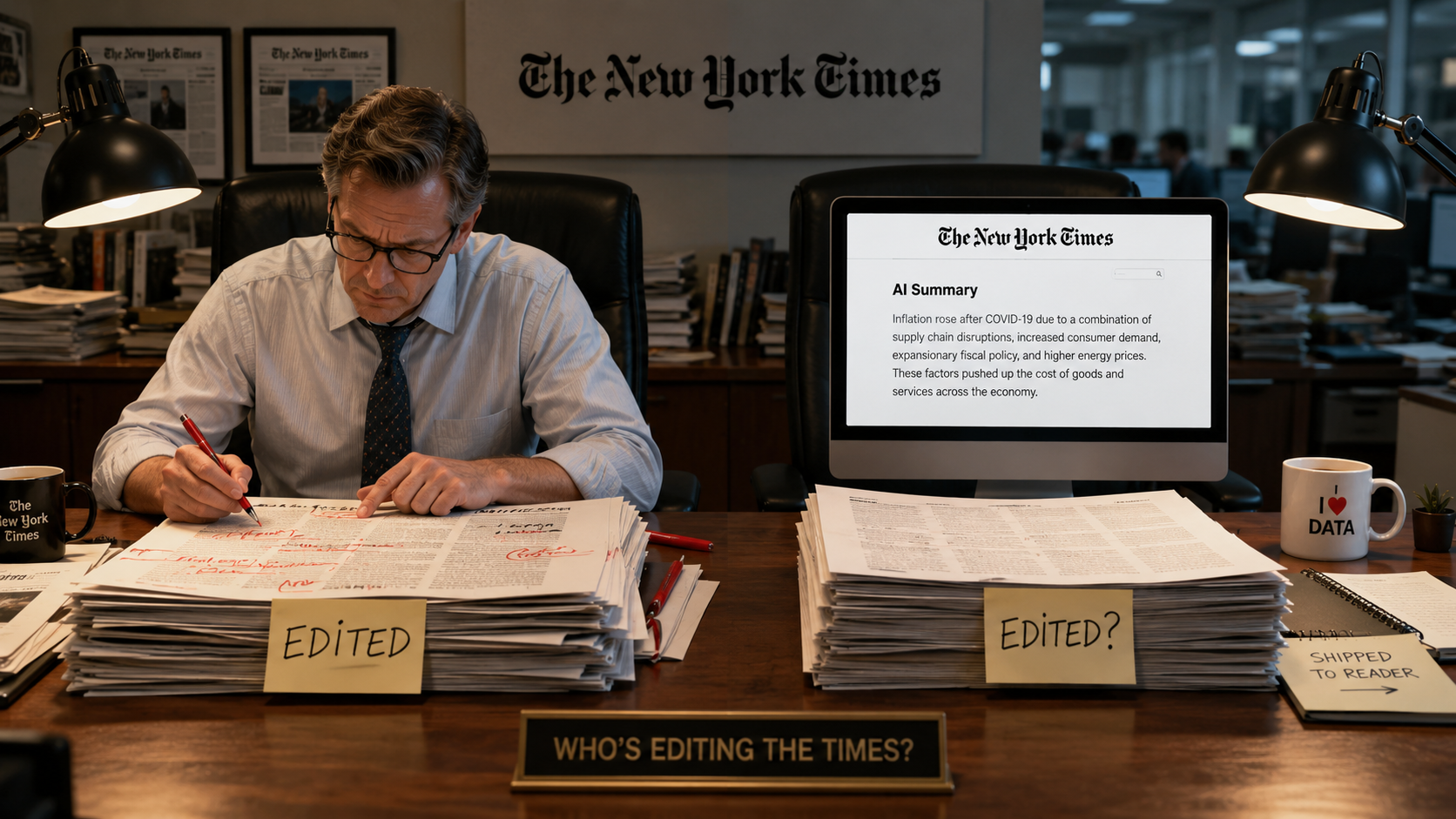
- I login to the NYT search and use an AI-assisted search engine, which might give me links to a NYT-approved article, or it might give me an AI summary, synthesized from NYT articles.
- I query an LLM and ask it to tell me how the NYT would answer the question. I never see any genuine NYT content.
Of the four options, the NYT would probably rank them as follows. 2, then 3, then 1, then 4.
#3 is an interesting challenge.
It’s a good idea to use new technology to improve the customer experience, and AI-enabled search is probably going to provide better results than regular search.
But there’s a problem. There’s no way NYT staff can vet every search response, which means some content is being presented to the reader without any direct human supervision. (I believe that violates their public policy on the use of AI, but … that’s another issue.)
Bad AI search sends the reader to the article. Good AI search (with summaries) makes reading the article unnecessary.
That’s training readers to consume an algorithmic simulation of the NYT rather than the NYT itself.
What are the long-term effects of this?
Assuming the AI-enabled search is better than the traditional search (which is likely), some number of readers are going to be satisfied with the AI summary and not bother to read any human-written content.
This undermines the NYT brand. After all, why do people go to the NYT in the first place? Because they value its editorial judgment and its point of view.
We have two options here. Either the AI can be trained well enough to preserve that editorial judgment in the search summaries, or it can not.
If it can, that seriously diminishes the value the NYT editorial team is bringing to the paper.
If it can’t, then who’s really editing the NYT content? It’s humans sometimes, and Hal the LLM other times.
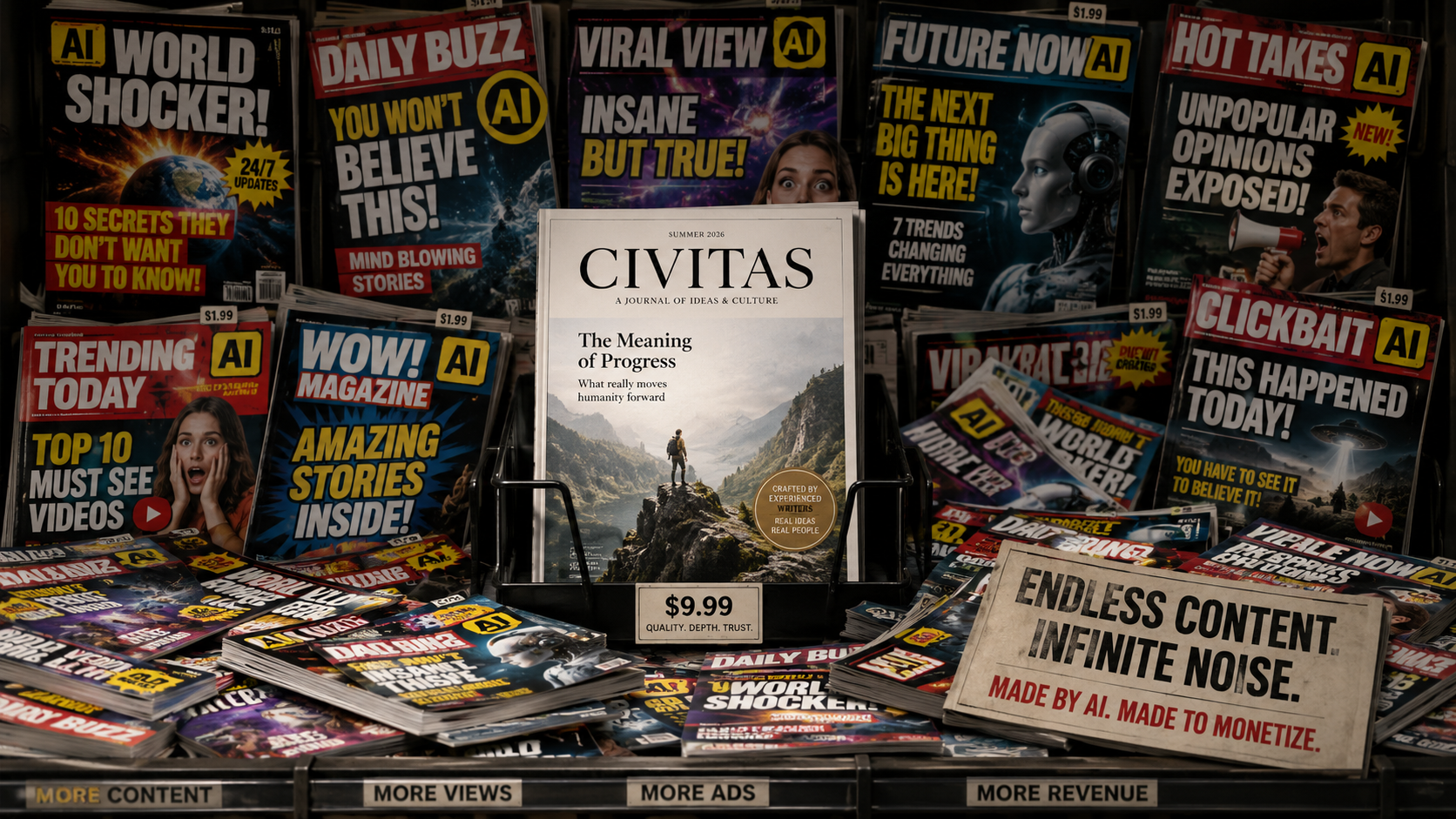
I have promoted the idea that publishers lean into their distinctives. They should have a point of view. A style. They should be argumentative and distinguish themselves from blandified AI content.
Serving up AI summaries of your content to your readers either diminishes that, or makes a lot of humans superfluous.
Both bad outcomes.
Exclusive / New York Times tests out AI-generated search summaries