Potter creating content

The collision of “digital first” and content management

Summary: “Digital-first” workflows often assume content is independent of format. It isn’t. The medium shapes the idea. Treating content too abstractly leads to weak results; effective publishing requires respecting the constraints and creative influence of each format. I’m afraid I misled the Chinese about publishing workflows. I’m not sure their economy will recover. A friend…

Read Full News
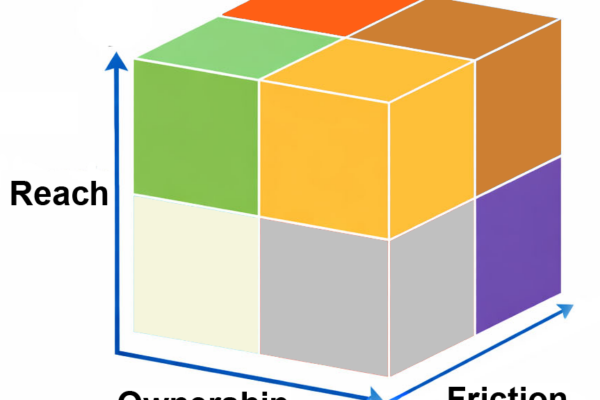
The Reach Ownership Friction matrix

The Reach–Ownership–Friction Model: A mental framework for the post-search era

Summary: Search used to give publishers reach with very little friction, even if they didn’t own the audience. Today every channel involves a trade-off between reach, ownership, and user friction, and understanding that three-way balance can help you design a smarter publishing strategy. For years, publishers could rely on search engines to deliver reach with…

Read Full News
Predicting the next word

AI is not “just predicting the next word”

Summary: AI is not a mind that thinks like a human, but it’s also far more than a simple autocomplete engine predicting the next word. Its outputs come from layers of statistical processes, pattern recognition, and structured systems that make the results surprisingly sophisticated — even though the underlying mechanism is still just math. Social…

Read Full News
Multiple book copies

“Write Once, Sell Many Times?” AI May Be Ending the Most Profitable Idea in Publishing

Summary: The publishing industry has historically relied on the “write once, sell many times” model, incurring high fixed costs for creation but recovering them through low-marginal-cost distribution — a system amplified by digital media like podcasts and videos. AI disrupts this by enabling personalized content generation for each user, but this new model contradicts the…

Read Full News
Robot supply chain

The hamburger machine: A modern fable about artificial intelligence, universal basic income, and the end of humanity

Once upon a time, clever businessmen learned how to make a hamburger, soda, and fries for $6 — by optimizing every step of the process. Families came from everywhere to buy these burgers. It was a happy place. Then Alan Mink had an idea. “What if I replace all the workers with robots? That would…

Read Full News