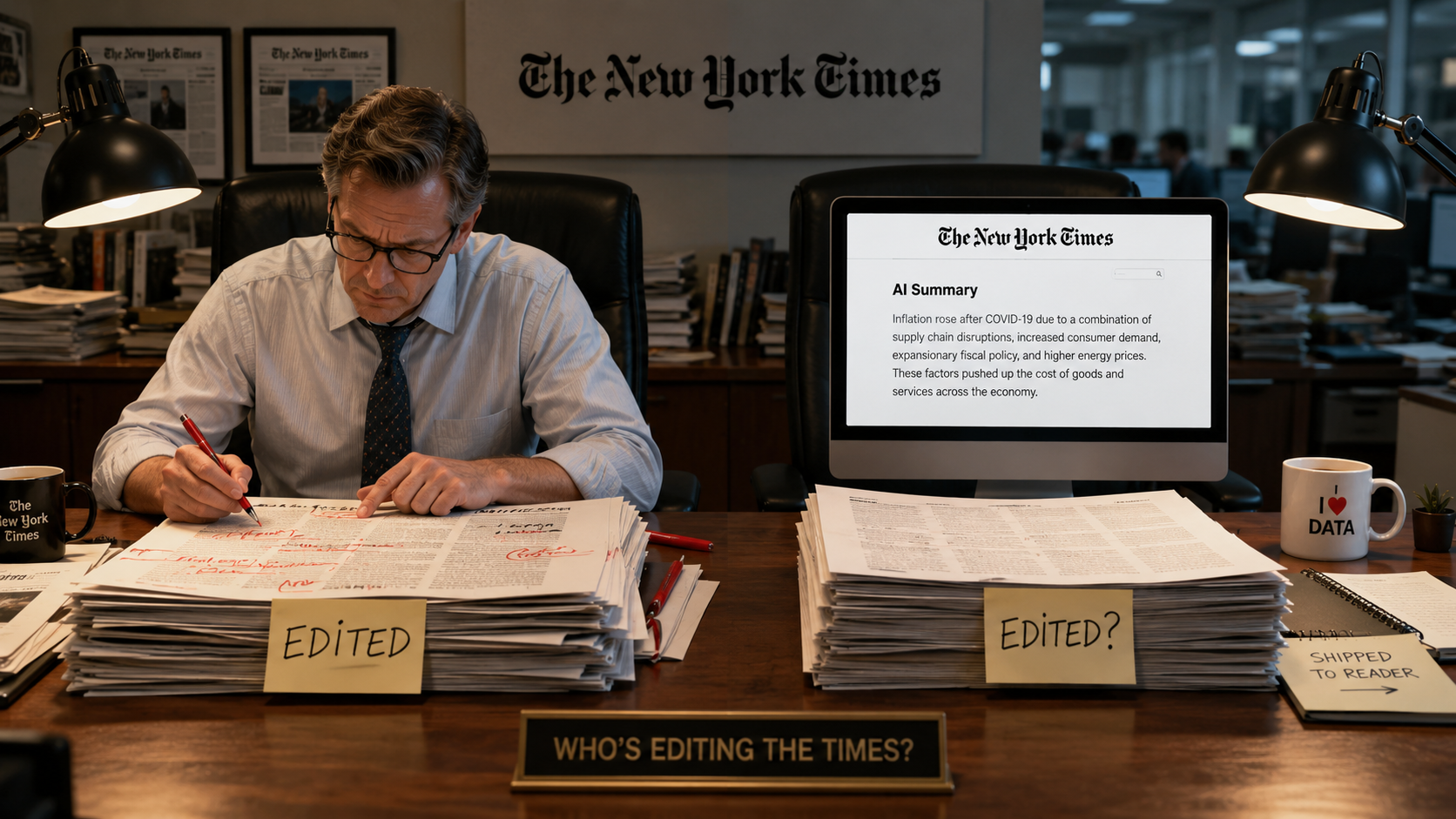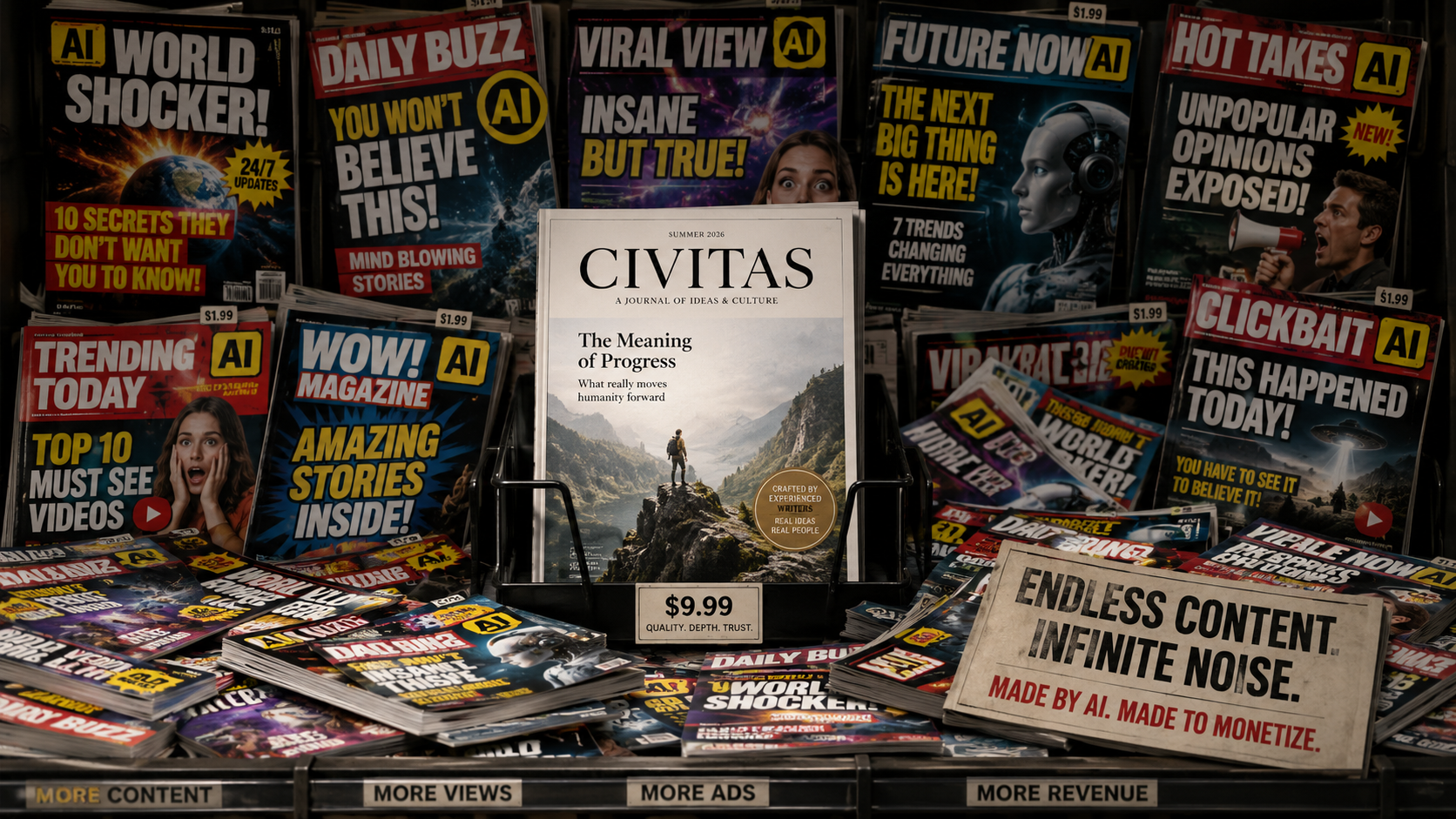
It’s Groundhog Day in the publishing world.
Each day goes like this. A new platform needs engaging content. It offers publishers distribution, revenue, or both. Guided by the breathless success stories from charismatic people at marketing conferences, publishers sign on and achieve modest success. For a little while.
Then the platform tightens its grip on the audience and publisher revenue declines.
Search did it. Social did it. Aggregators did it. Now AI is doing it.
The story is always the same. “All your customers become our customers.” The platform ends up with Andie MacDowell.
The lesson is so incredibly obvious: When someone else owns the customer relationship, publishers lose.
The Pattern Keeps Repeating
Start with search.
Publishers invested heavily in optimizing for Google. It drove enormous traffic. It looked like a win. But Google was making billions collecting (and selling) information on the publishers’ audiences. Publishers got clicks, but Google got the customer data.
Then Google added featured snippets, instant answers, and zero-click results. The same system that once sent traffic began keeping users on its own pages.
“All your customers become our customers.”
Social followed the same arc.
Publishers built audiences on Facebook. Traffic surged – for a while. Entire content strategies were built around somebody else’s platform.
Then the algorithm changed, news was deprioritized, and organic reach collapsed.
“All your customers become our customers.”
Aggregation added another variation.
Platforms like Apple News bundled content together. Publishers got exposure — but at the cost of becoming an interchangeable cog in a content machine they didn’t control.
The pitch is slightly different each time, but the underlying strategy is always the same.
“All your customers become our customers.”
(I know it’s tiresome to keep repeating that, but until publishers learn this lesson they’ll keep falling for the same trick.)
Now It’s AI’s Turn
If AI is going to answer tough questions, it needs to be trained on original, professional, reliable, high-quality content. AI can’t walk Main Street and talk to the shop owners. It can’t fish the bridge pilings in the Chesapeake Bay. It needs somebody else to provide that perspective.
(I hope you’re already seeing the trap.)
The AI companies may pay you for the content – so long as they get the relationship. And so long as it keeps them out of court for copyright infringement.
It’s entirely understandable why publishers are interested. They’re under a serious squeeze, and this is a potential new revenue source.
But in most cases this is the same old tech company trap, except this time it’s even worse.
Google and social gave publishers some exposure for playing their game. They made billions, but at least you made thousands, and sometimes you got new customers out of it. (Yay!)
AI is only going to give you cash. These systems will absorb your content, answer your customers’ questions with it, and mostly leave you out of the equation. You might get a link, but who needs a link when their question is already answered?
There are no Solutions, only Trade-offs
Licensing content to AI trades short-term revenue for long-term relevancy.
If short-term revenue is the goal, it might be worth it to grab some of that cash now while you can. But if you want to stay in business for the long haul, it’s probably not a good trade. With some possible exceptions.
You may have content that you’re not effectively monetizing now, and it won’t hurt you if AI indexes it. For example, if you make your money delivering today’s news, it might be worth it to license your archives. But before you do it, think long and hard about whether your licensing deal might be undermining your own business.
Don’t license the content your business depends on. That’s not monetization — that’s training your replacement.
Focus on Ownership
Publishers lose when they trade content revenue for the customer relationship.
- Don’t do anything that serves to weaken your customers’ need for your product.
- Establish a direct relationship with your customer, not via any other platform or service.
The question isn’t, “Should we license content to AI?”
The question is, “How do we build a business where consumers have to come to us for answers and advertisers want access to that audience?”
If you can do that and also get some license fees for your content, fantastic. Just keep your eye on the goal and don’t get distracted by a little extra revenue today that undermines your business tomorrow.
Three Rules
- Evaluate revenue opportunities against your long-term strategic goals. As a general rule, money today is better than money tomorrow, but not at the expense of tomorrow.
- Focus on content AI can’t create, and for Pete’s sake don’t help them do it.
- For some ideas along those lines, see “AI Has Made ‘Good Enough’ Free. Here’s What You Do Now.”
- Emphasize direct relationships with your customers and double down on your efforts to create and nurture them.
- Use “Registration, Subscription, and Membership” properly.
- Focus on your e-newsletter.
- Consider events for your most engaged customers.
- Emphasize direct ad sales.
If you’re not sure how to apply this to your business, give me a call.
Let’s Change the Script
The tech companies have succeeded by finding new resources and exploiting old ones.
Shoshana Zuboff shows how Google discovered that customer information is a new “natural resource” to be harvested. (See The Age of Surveillance Capitalism, or, better yet, watch some of her YouTube videos.)
The tech companies view publishers as a content resource they can exploit to grow their own audiences. Unfortunately, publishers have been willing to take dimes while the tech titans make dollars.
It’s time for us to focus on the customer relationship – almost to the exclusion of everything else.
We want to own the audience, and we don’t want to help any other business that weakens that relationship.
The tech companies were a threat to publishers in the past, but AI is worse. It doesn’t just take your audience—it removes the need to visit you at all. We have to fight against that.