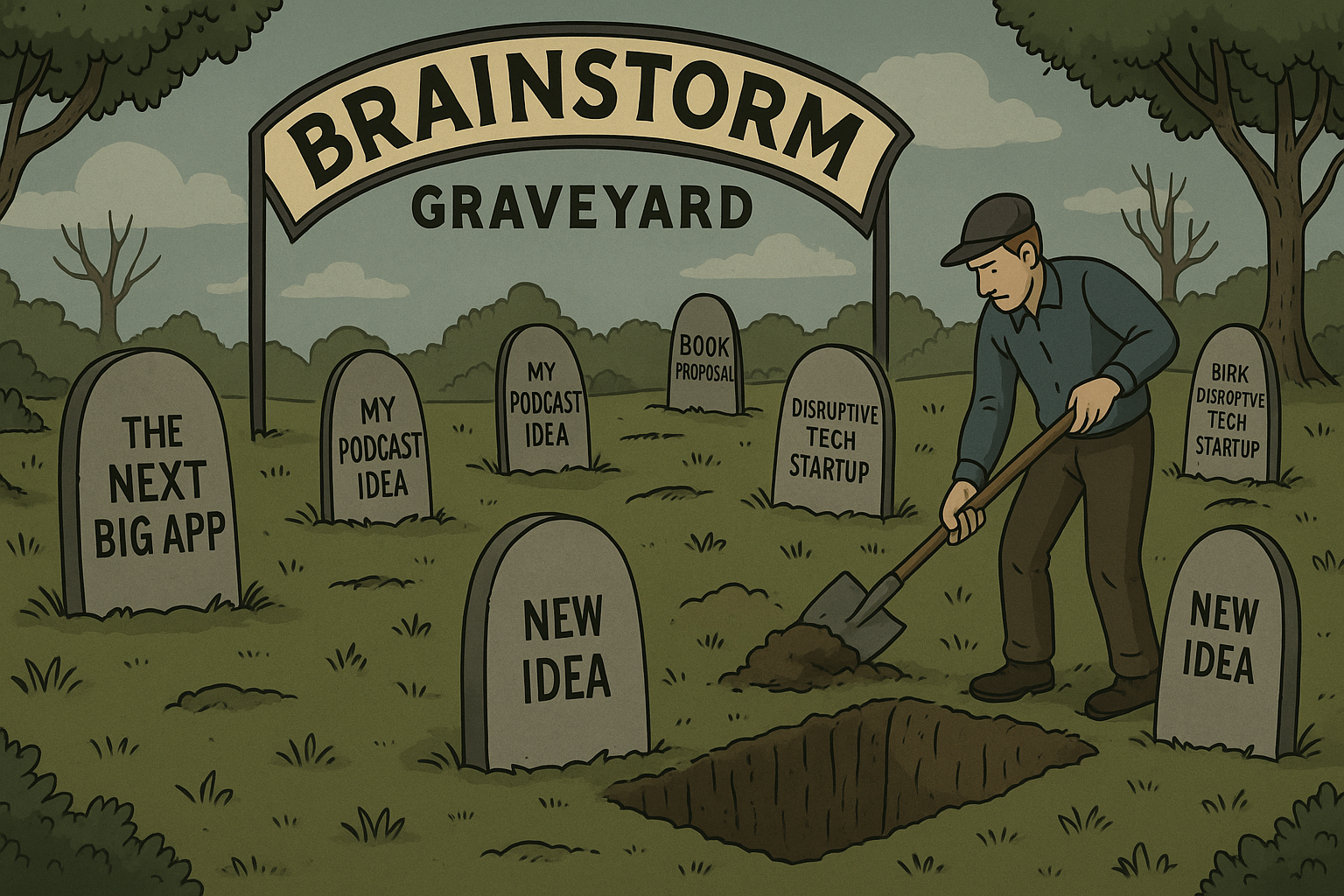
A post on LinkedIn lamented that “92% of people never act on their ideas.” My immediate reaction was, “that’s probably good because 95% of ideas are dumb.”
I admit that I wasn’t participating in the spirit of the post, which was to encourage people to stop dreaming and do something, which is often thought to be good advice. It’s also true that every dead body on Mt. Everest was once a highly motivated person with a great idea.
A man I know is a fount of new ideas. I’d estimate that one in five are worth thinking twice about, and one in twenty are worth any effort. Maybe one in a hundred would yield a positive result.
Ideas are a dime a dozen. Good ideas are worth more. But the real value is in two things: sorting the ideas, and implementing them.
There are many different ways to classify ideas. New vs. old. Good vs. bad. Practical vs. impractical. Hard vs. simple. Expensive vs. cheap.
A generic recommendation to “act on your ideas” doesn’t make much sense until we solve the classification problem first. We need a filter to sort the good from the bad — from multiple points of view. Once an idea passes that test, then we can hire the engineers and get it done.
Sorting Ideas
My former boss Richard Thompson built a successful publishing business on the back of an aggressive new product development process. We were always thinking of new publications, and upper management encouraged staff to bring new ideas to their attention.
The upside was a dynamic, growing company that had a clear path and method for developing new products. And we developed quite a lot of them.
One downside was that people didn’t always know why their ideas weren’t acted on, which made some employees frustrated and a little cynical.
“You keep asking me for ideas, then I give you some, and nothing happens!!”
That was a mistake, and I’ll explain what should have been done to solve that. But first, I want to review how the ideas were evaluated in the first place.
The New Product Checklist
Richard built his company on producing plain-English guides that explained how to comply with government regulations. That focus narrowed the list of acceptable ideas. We weren’t going to start a local newspaper or a magazine about Hollywood celebrities.
There were some fairly clear threshold questions to winnow the wheat from the chaff.
- How big is the market?
- Can we get lists?
- Is the topic “nice to know” or “need to know”? (I.e., what are the consequences of failing to comply with this regulation or law?)
- Does the subject matter change frequently enough to support monthly updates?
If the idea passed those initial questions, we’d get into deeper issues like competition, price, authors, and other things. We also had a five-year model that would simulate (and predict) the publication’s profitability based on list size, price, marketing efforts, and renewals.
The absolute best thing Richard contributed was a willingness to try and fail. Once an idea made it through the process, he was willing to dry test it in the market. That meant that we created a marketing campaign to sell a product that didn’t even exist yet.
It was a good method that powered the company’s success.
Where We Failed
Richard worked hard to create a dynamic, positive, growing workplace, and to some extent he would have endorsed the premise of Act Like An Owner by Blonchek and O’Neill.
There was a lot to learn about publishing and product development at Thompson Publishing Group – if you were lucky enough (like me) to be in the right conversations.
Unfortunately, not everyone was. We didn’t work hard enough to push the logic of the product development process down the ranks so that everyone understood why ideas were accepted or rejected. We should have explained the logic of the new product idea filter, and when an idea didn’t pass the test, we should have explained why a little more carefully.
In short: How to manage ideas
- Encourage an attitude (or culture) of creativity and new ideas.
- Recognize that most ideas won’t pass muster.
- Create a simple set of threshold questions to triage ideas.
- Create a more rigorous test for ideas that pass step 3.
- Be willing to fail. Don’t overthink it.