Why do we Americans cut our meat with the fork in our left hand, then switch it to the right hand to eat?
To slow down! The goal of dining is not to find the most efficient way to get food into your stomach. Slowing down is part of the ritual.
The same might be true of writing. A keyboard is an efficient way to turn thoughts into words, but writing with pen on paper has surprising benefits.
President Obama had a similar thought. I recently read that he used to write ten letters every night to people who had written the White House. That’s a lovely, heart-warming thought, but this is what caught my eye. He wrote his letters with a felt-tip pen on paper.
Why? The article offered some reasons, but I wanted to find out for myself, so I re-wrote the introduction to one of my own books.
My experiment
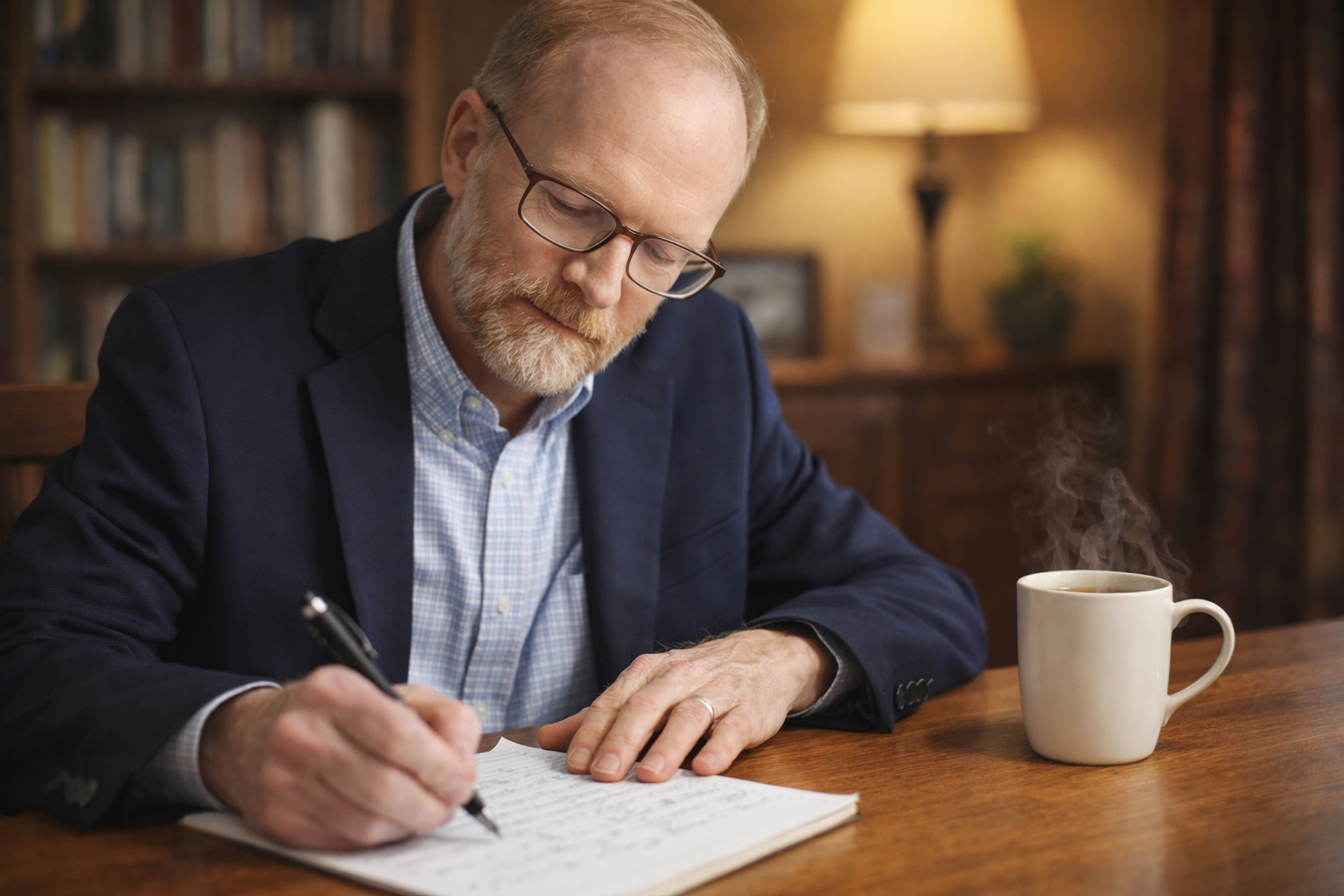
Here’s what I did. I would read a page, and glance ahead to see what was coming, and then I would write it again — completely from scratch. I didn’t try to recreate the printed version. I re-envisioned it.
The change was dramatic. I could see and sense that the process of writing with pen on paper changed my thought process. Typing is so fast. Writing by hand requires reflection.
In my handwritten version, paragraphs shrank. Examples disappeared. Arguments sharpened. Details that once seemed important suddenly felt like clutter. Writing by hand forced me to decide what elements moved the argument forward and what details were unnecessary.
To put it in a nutshell, the slower process of writing by hand caused me to ask, “What am I really trying to say?” Because, let’s be honest, writing by hand is hard. My brain wants to avoid as much of that labor as possible, so it compresses and summarizes. Like what you do when you take notes at a conference.
Speed is great for transcription. It’s terrible for thinking.
That much was obvious to me, but I wanted a more structural analysis of the difference between the two versions, so I uploaded it all to ChatGPT. The resulting insights were fascinating.
What the LLM told me
According to ChatGPT…
My typed voice was slightly academic, explanatory, and careful.
My handwritten voice was conversational, argumentative, witty, and impatient.
The handwritten version is (according to AI) closer to the way humans process arguments.
Handwritten:
- Problem
- Frustration
- Question
- Explanation
Typed:
- Context
- Background
- Explanation
- Thesis
The difference is subtle but important. The typed version begins with context — information the writer thinks the reader needs. It’s like building a case for a jury, step by step and stone by stone.
The handwritten version begins with a problem — something the reader cares about. One structure explains ideas. The other pulls the reader into the meat of the issue.
Now, take a look at the first two words under “Typed” and tell me they don’t scream “boring.”
My handwritten version compressed the type-written version with an emphasis on the mental struggle of the subject matter. It’s more thesis driven and cuts explanatory details that don’t drive the argument.
Here’s what Hal said.
“When typing, you seem to think in paragraph units.”
“When handwriting, you think in idea units.”
The handwritten version uses framing sentences.
- “Here’s where it gets interesting.”
- “But here’s the problem.”
- “This is frustrating.”
These narrative signposts guide the reader through the thinking process.
I found this analysis fascinating.
“Your handwritten version reveals your natural cognitive style.”
“You think in this order:
- tension
- problem
- analogy
- conceptual principle
- synthesis”
“But the typed introduction suppresses that and forces a more academic structure.”
Once again, can you say “boring”?
But this isn’t about my cognitive style. The question is, what lesson can publishers and content creators take from this experiment?
Takeaways for publishers and content creators
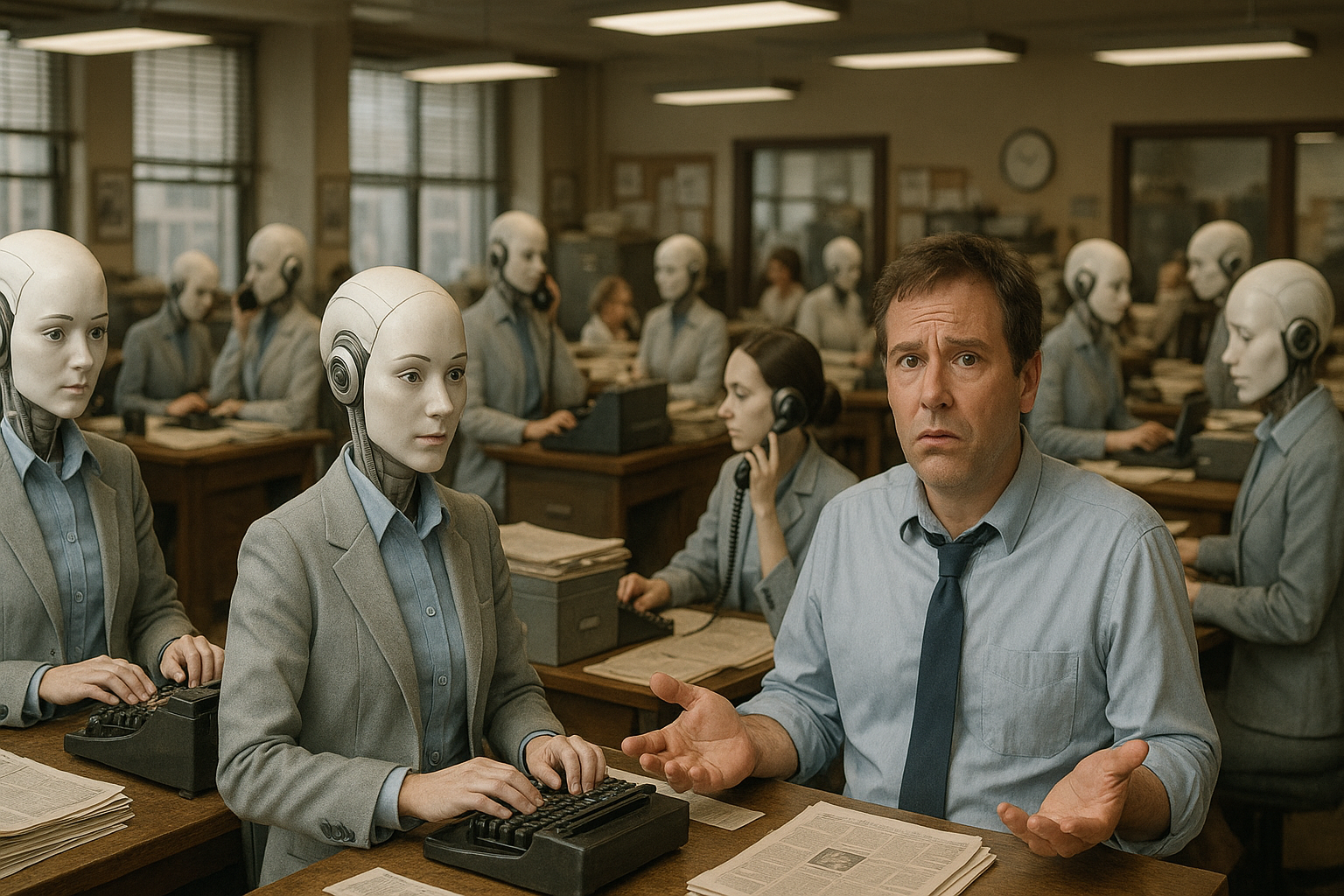
Let’s start with the concern about “AI slop.” Publishers are wondering how they can distinguish their content from the computer-generated version.
Maybe be less like a computer?
Sit down with pen and paper like a human.
Try this with your next essay — or with the junior writer who just handed you an average, uninspiring piece of work.
- Read it, then set it aside.
- Re-create it by hand, on paper.
- Now compare the results.
Which version is more compelling?
AI writes fast, and it can create a “good enough” article in seconds. Humans think slowly, and maybe we should consider whether the efficiency of a keyboard is hurting more than it’s helping. After all, some great books were written by hand.
I’m not saying “don’t use AI.” In a previous essay I strongly encouraged the use of AI in writing.
But let’s keep the human touch. And if you want writing that sounds human, try slowing the process down and using a pen. Like a human.