Most people seem to have this vague idea that science advances when a new theory comes along that explains the facts better. The new theory is so compelling, or so we imagine, that people abandon the old orthodoxy and adopt the new one. Following the facts, and all that sciency stuff.
According to Thomas Kuhn’s “The Structure of Scientific Revolutions,” that’s not quite the way it works. Rather, scientists adopt a paradigm — a way of interpreting and understanding the world – based on what they know. The paradigm works decently well, but there are always niggling little problems around the edges. The uncomfortable bits of data that don’t fit the paradigm are discarded or ignored.
Eventually the discard pile gets bigger than the main deck and the tension becomes unmanageable. The old guard – the people with tenure, and the people who edit the journals – cling to the old orthodoxy, but the younger generation takes a fresh approach. They haven’t been immersed in the old theory for quite so long. They haven’t written books defending the old perspective. Their careers and their grants don’t depend on it. They are much more open to the new perspective, but they don’t have the power to change the institutions.
The new perspective finally gets its due when the old guard retires and younger scientists take their places.
Something similar is going on with our attitude towards the news.
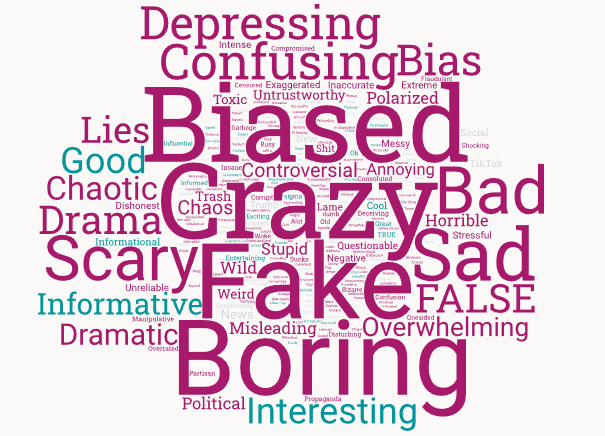
Brian Morissey opened his latest podcast with a review of how teens view the news. Young people think – quite rightly – that the news is “biased, boring, and bad.” Just like in science, the old guard resists this new paradigm and continues to parrot stuff about objectivity, “speaking truth to power” and all the other idiotic things journalists tell themselves about themselves.
Nobody believes them – how could they? – but there’s too much riding on the old myth. We’re supposed to believe in the model of the objective, honest journalist, and we’re supposed to long for a return to the days of Walter Cronkite.
This is all poppycock, but people are afraid to admit it.
Except teenagers. They love tipping sacred cows and going off in their own direction.
“More teens believe professional journalists regularly engage in unethical behaviors than they believe journalists regularly engage in standards-based practices. For example, only 30% of teens believe journalists frequently confirm facts before reporting them. In comparison, half of teens (50%) believe that journalists frequently make up details, such as quotes, to make stories more interesting or engaging.” (Source.)
It’s hard to pay attention to the news and deny that these teens are on to something.
They’re going to get things wrong. They’re going to take assumptions too far. They’re going to make a big fuss over small fusses. They’re teenagers, after all. That’s what they do.
But they have a point.
In episode 196 of The Rebooting, Brian Morissey chats with Caliber CEO Ramin Beheshti about how they’ve taken this to heart and changed their content strategy to meet teens where they are. It’s an interesting new approach.
Discount the current generation of news consumers at your peril. Another cadre of No BS / We see through your bias is ready and willing to toss fake media players (so-called ‘journalists’) on the rocks is not a threat, it’s a reckoning.