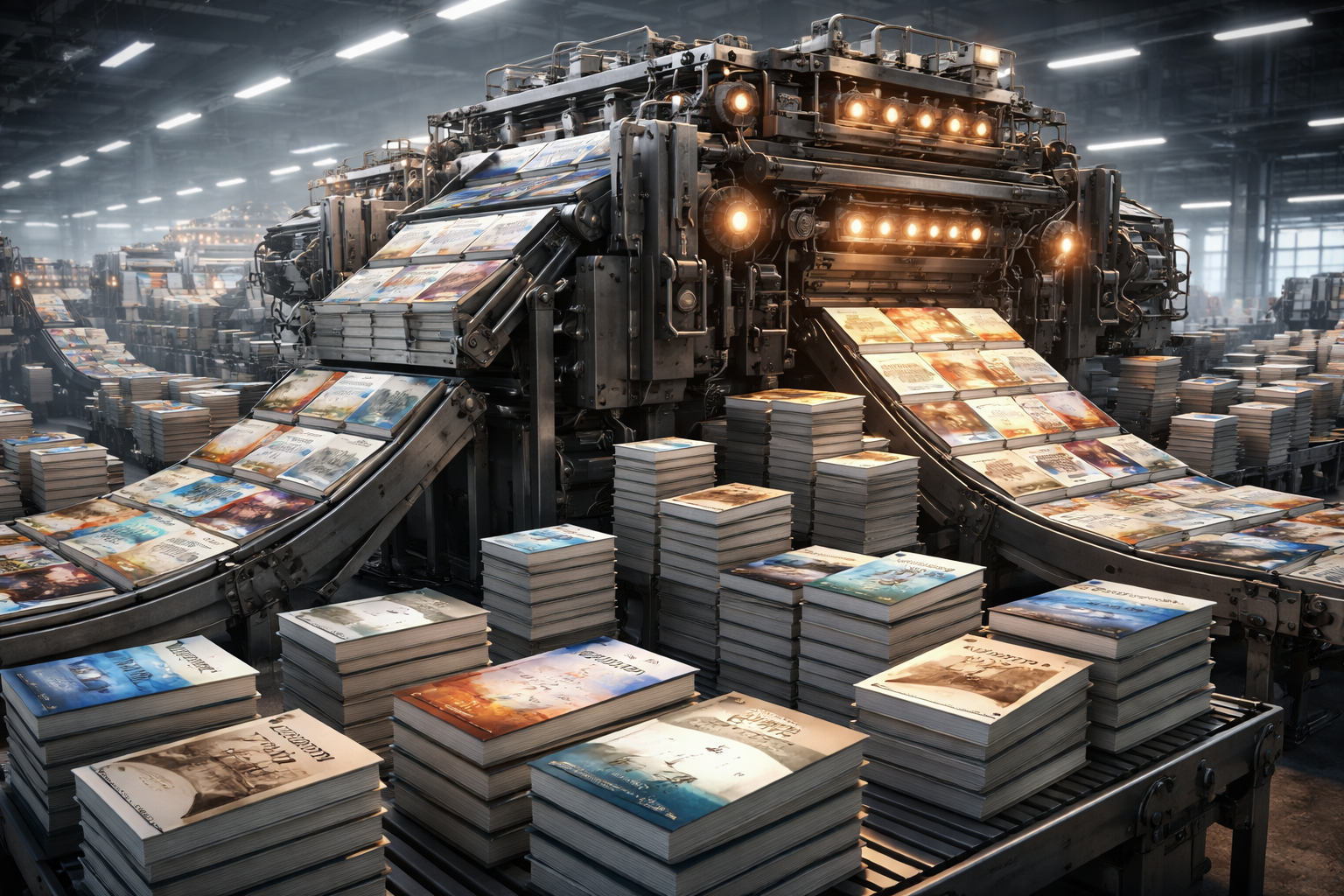
Once upon a time, clever businessmen learned how to make a hamburger, soda, and fries for $6 — by optimizing every step of the process.
Families came from everywhere to buy these burgers. It was a happy place.
Then Alan Mink had an idea.
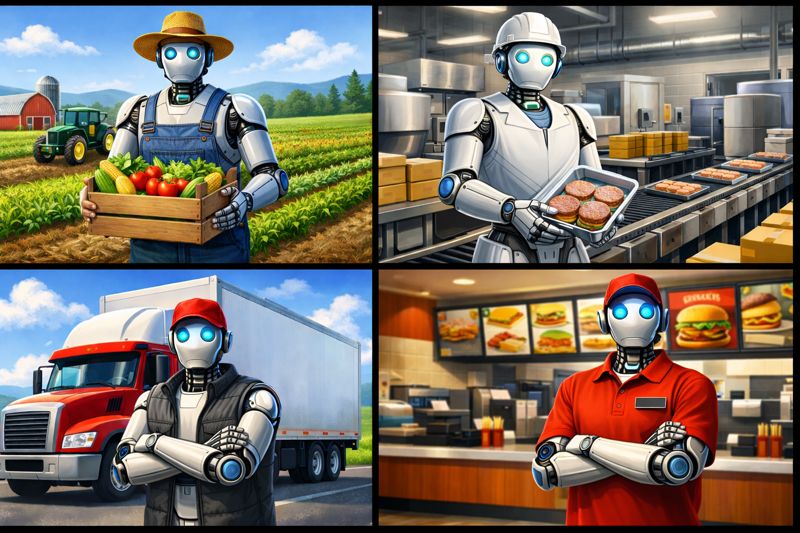
“What if I replace all the workers with robots? That would cut the cost of a meal to $2.”
And so he did.
The food was the same. The service was the same. Families who used to spend $6 now had $4 left over to spend on other things. It seemed like pure progress.
But the farmer, the butcher, the driver, and the store manager no longer had jobs. All their wealth was tied up in their income. They didn’t own robots, so they didn’t benefit from this increase in wealth. Soon they couldn’t even afford the $2 meal they used to make.
“But wait,” said Alan Mink. “I’ve created wealth in the economy. That $4 didn’t vanish. People will spend it elsewhere. New jobs will appear. That’s how it always worked before.”
And for a long time, that was true. New technologies replaced some jobs but created others.
But this time the machines didn’t just replace some jobs. They replaced almost all of them.
“No problem,” said Mr. Mink. “We’ll pay everyone a universal basic income. Robots make everything cheaper. We’ll tax the abundance and share it.”
So the wealth generated by the robots was taxed, and the workers received enough to get by. Far less than they used to make, but enough. They could eat. They could survive.
But they no longer earned their living, and their choices didn’t drive the economy.
Prices rose to pay for universal basic income, so the cheap hamburger wasn’t quite so cheap anymore.
Money still existed. Goods and services were everywhere. But it was all under the control of Mink and the government.
As Mr. Mink looked out over a world where machines produced everything and people were only consumers — and they only consumed what they were allowed to, and only if they recycled and believed the things the government told them. A new thought occurred to him.
“If the machines do all the work, why do we need all these people anyway?”