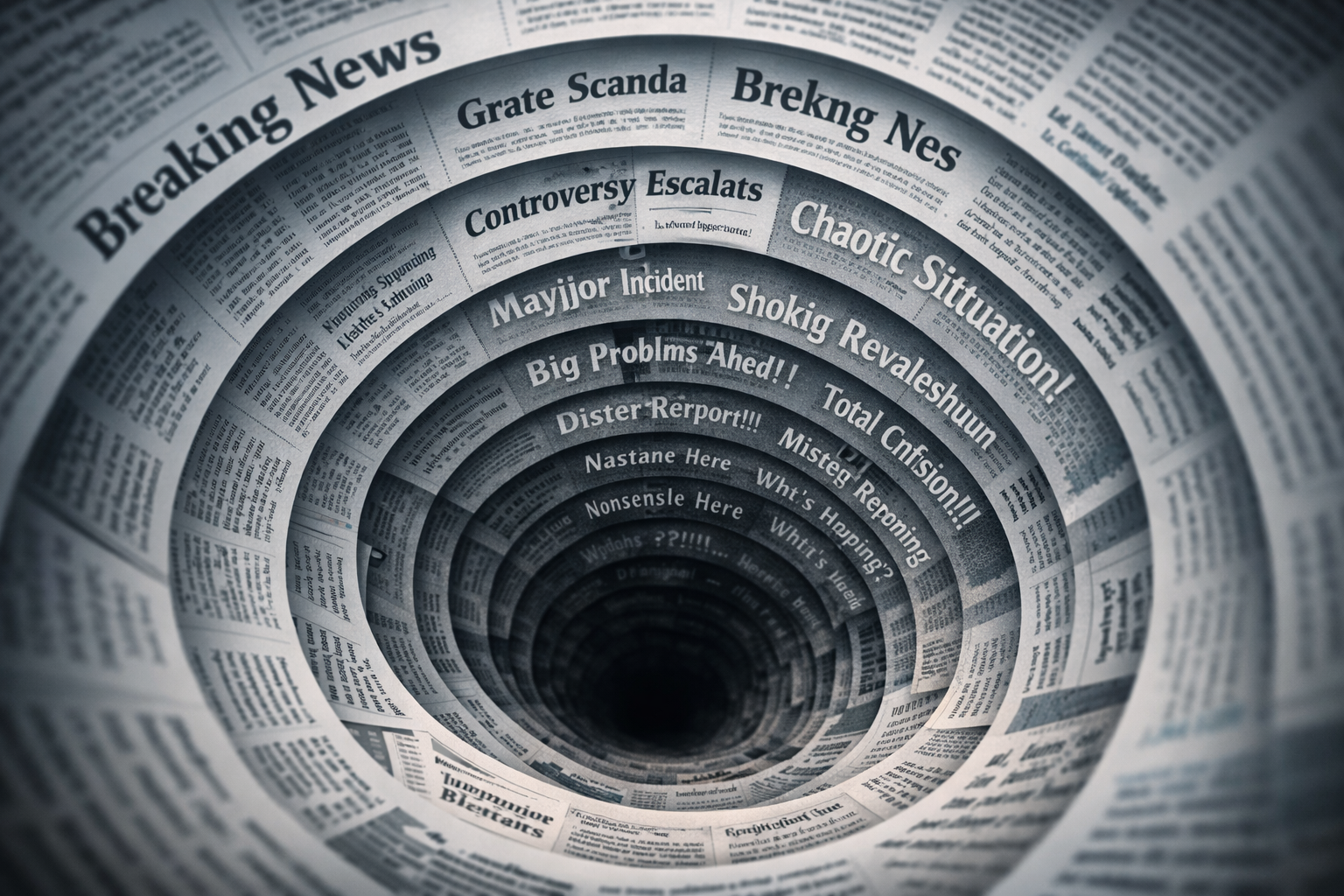
Thirty years ago a mediocre article quietly died on an editor’s desk.
Today it goes straight to Substack.
The internet was built on this strategy: spend 20 percent of your effort to get something to 80 percent (“good enough”) and hit publish. Sometimes it gets lost in the noise, but occasionally a piece catches fire. It was like buying a lottery ticket with an idea.
AI has dramatically changed that equation. Now it takes almost no effort to get content to 80 percent done.
Here’s an example.
Over the last few days I’ve been generating songs using Suno. ChatGPT helps me write and refine the prompts. In a few minutes I have a new song, and most of them are good enough to use in a dance lesson. One is particularly good and the melody got stuck in my head.
If I had the pro version of Suno, I could do more. I’d take the (generally) good output, work with it in the studio and make it great. I’d polish the lyrics, file off the rough edges, add sparks where needed, adjust the mix between rhythm and harmony, and remove all those annoying pauses that dancers hate.
Here’s the thing: while I have a well-trained ear for music, I’m not a song writer. AI has completely changed the creative process. You don’t start with a blank sheet of staff paper. You only need to give some very basic directions, and presto – you have pretty decent content.
That’s the easy part, but what happens when the world is flooded with “good enough” content?
The surge and subsequent death of low-effort content
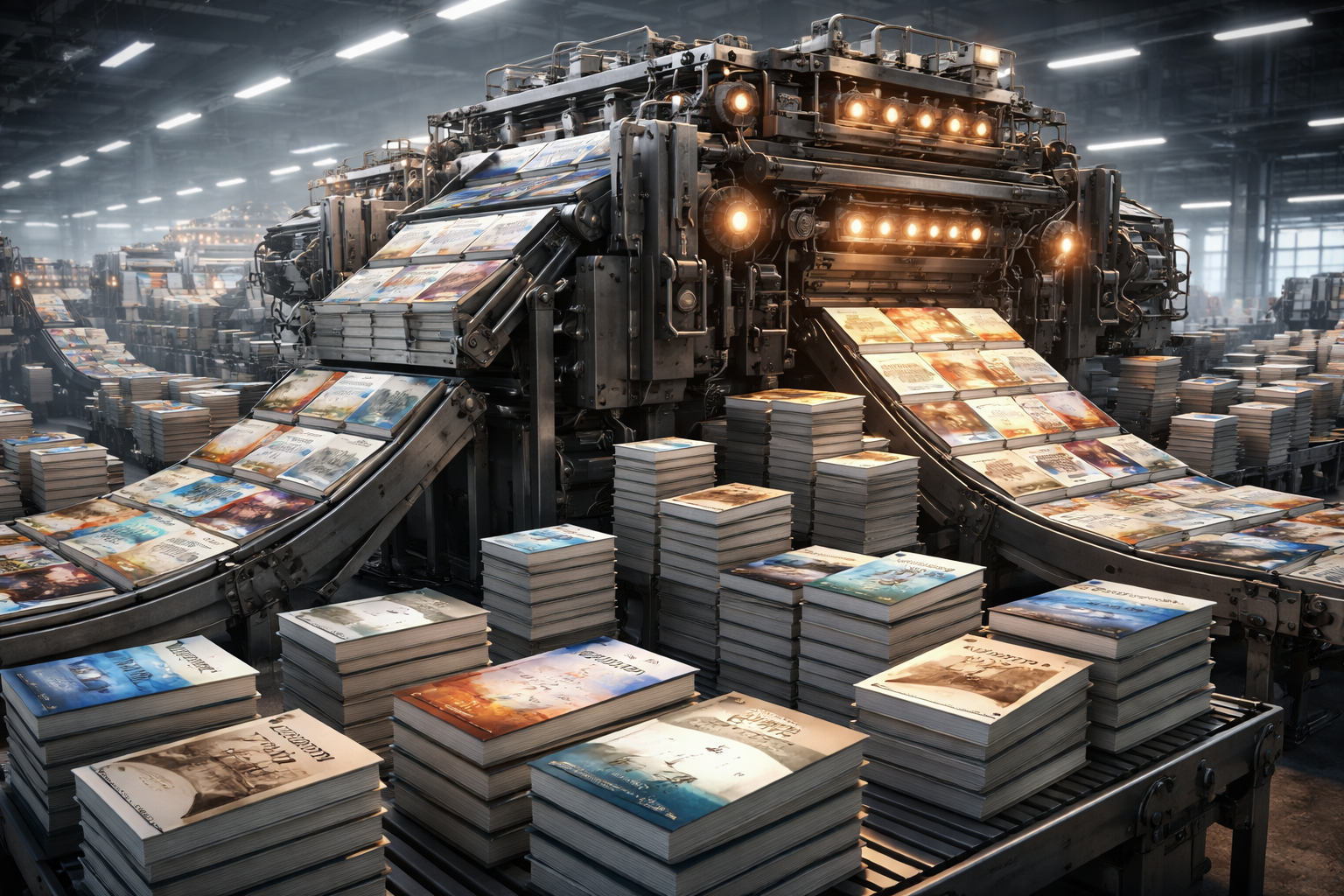
AI didn’t create mediocrity, but it does industrialize it. The cost of making something that’s “good enough” has gone to zero.
Suno can make a decent song, and LLMs can generate “probably good enough” articles at scale in the twinkling of an eye. We’re seeing it already, and we’re all bracing for the tsunami of AI-generated middle brow content flooding every channel.
AI didn’t invent mediocre, low-effort content. It’s been the currency of the internet since we first heard the word “blog.” AI has simply made it easier to create and distribute average work. Pretty soon we’re going to be neck deep in it.
A shorter, harder trip to excellence
The creative process often has two phases.
First comes the rush. The idea appears, the outline takes shape, and the words start flowing. You get little dopamine hits as you move from milestone to milestone until you finally hold the rough draft in your hands.
Then the hard work begins.
All good writing is re-writing, but re-writing requires a different mindset. It isn’t powered by creativity so much as criticism. It’s where you take all the advice you’d give to another writer and apply it to yourself.
That’s not an easy thing to do. It’s the grind of eliminating “that,” killing “very” and “really,” transforming or removing adverbs, cutting redundancy, showing, not telling, and so on. It’s where craftsmanship enters the picture.
It’s tempting to take a short-cut and stop at “good enough.” We’ve become accustomed to it. Just hit “publish” and go on with your life.
The impending flood of AI-generated middle-brow content will make such efforts useless because “good enough” content will never stand out.
AI is displacing a lot of the foundational work in the creative process. Creative humans with AI assistants won’t be staring at blank pages or struggling to get to the first draft. AI will give you the first draft.
The human role has changed
It’s common to say AI gives the first draft and humans polish it. That’s not new. But bear with me. It gets more complicated than that.
We like to think that humans provide what AI lacks: judgment, clarity, spark, intuition.
AI-generated content will start at “good.” It’s our job to make it shine through the ruthless, obsessive attention of a critical eye. This last part of the creative process is slower and less enjoyable because progress is slower and you don’t pass as many milestones.
I’m reminded of how Gimli told Legolas what dwarves would do with the Glittering Caves of Aglarond. “With cautious skill, tap by tap — a small chip of rock and no more, perhaps, in a whole anxious day — so we could work ….”
When AI floods the world with “good enough,” content creators won’t survive unless they rise above and imitate Gimli’s careful and thoughtful chipping. That is, careful, diligent, human talent and craftsmanship.
Every day on LinkedIn I see posts about how AI can’t replace this or that human skill. That was 2025 talk. AI can and does do “good enough” in almost everything a human can do. But the very same algorithm that allows it to create “good enough” keeps it from creating great. Without special prompting, AI optimizes towards the statistical center. Genius lies on the edges.
What now?
We all have to change our self image. You’re not a producer, you’re a refiner. You’re not a writer, you’re the guy who polishes the copy until it shines.
AI can write a serviceable essay on leadership. A veteran can tell the story about how the captain went out in the middle of the night under heavy fire to rescue his men.
AI plays the averages. Content creators need to master the narrow end of the distribution curve by the relentless pursuit of excellence so they can stand out from average.
AI and the death of ego
My premise to this point has been that AI gives you a perfectly competent, bland first draft that only a human can polish and shine into something extraordinary. That’s not a particularly new insight, but here’s where we get to the takeaway.
I tested that premise with this very article. I spent several hours trying to get it just right. I had my son read it and give me suggestions. I finally thought, “now it’s ready to go.” But before I published it, I uploaded it to ChatGPT one last time and said, “Prove me wrong. Rewrite the following essay and make it interesting, with voice, character, and attitude. Add stories or illustrations. Unleash your creative potential.”
ChatGPT wrote a better article than I did.
This is where ego rears its ugly head. Like John Henry, I want to believe I can do better than a machine.
We have to get over that. AI is a tool, just like a steam drill, and we have to use it.
It’s true that AI blandifies by default because that’s the way it’s written. It looks for the statistically average. The sound middle. But it doesn’t have to do that. It can also add “personality” and attitude.
The process is not linear.
- A human feeds AI an idea
- AI makes a competent first draft
- The human polishes to perfection
The new process is iterative.
- A human has an idea
- The human works with AI to sharpen the idea
- One or the other of them writes a first draft
- The human works with AI to sharpen the focus, tone, and structure of the first draft
- The human walks away and works on it with hard, head-down, concentrated attention
- The human submits this polished version to AI with a different set of prompts
- Etc.
Don’t think “AI creates a draft and I perfect it.” Use AI through the entire process.
This method overcomes “blandification” because the AI is given progressively more interesting — and more human — material to work with. Without special prompting, AI gravitates toward the middle and creates middle-brow slop. With the right prompts, and a human willing both to push the edges and set aside his ego, it becomes a powerful partner in the pursuit of content that rises above the 80 percent.