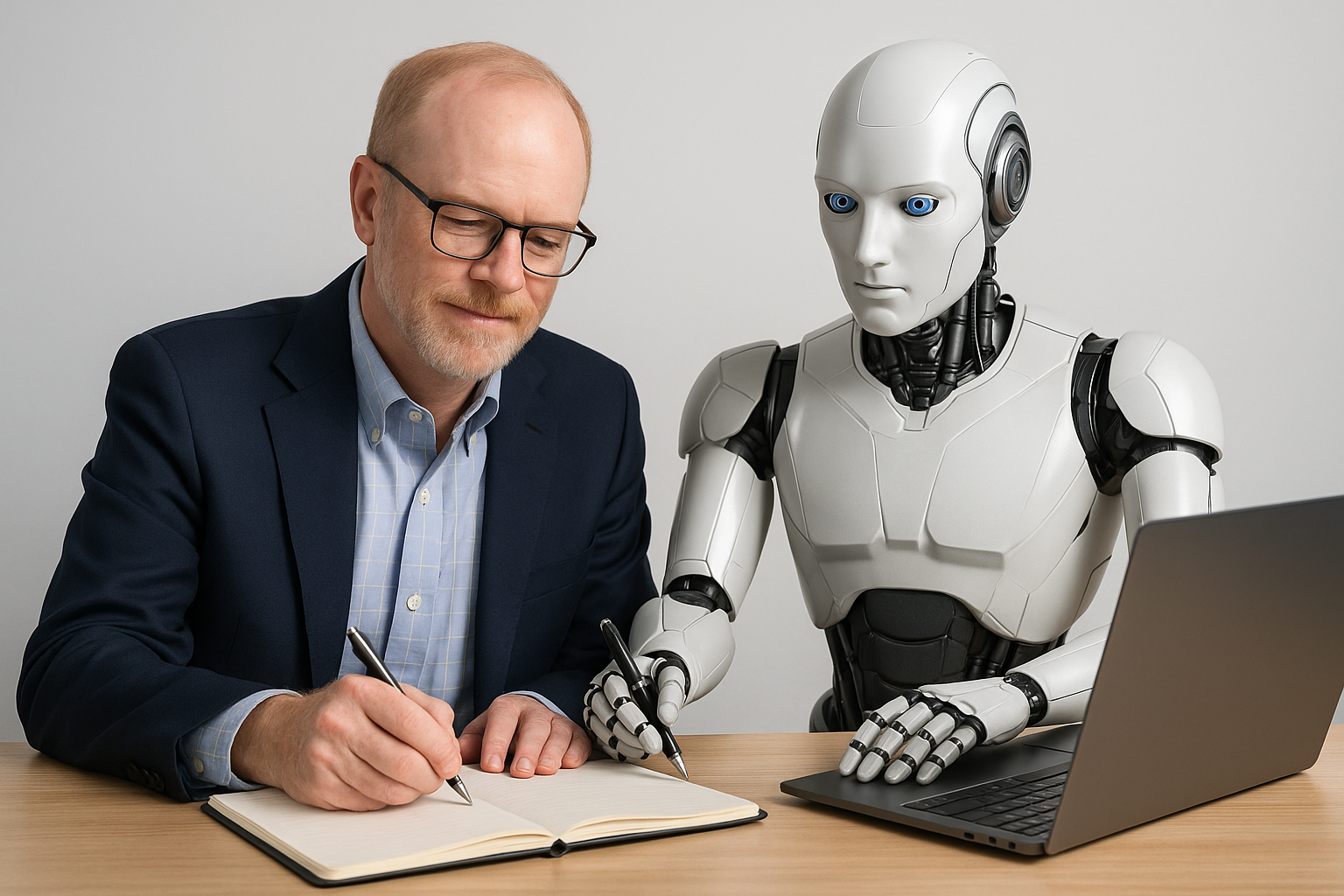
Bo Sacks and I chatted recently about whether creative works should disclose whether they used AI. Disclosure is usually the right choice, but I know from personal experience that it’s a complicated question. You can reduce it down to a binary, but a lot of nuance would be lost in the process. To illustrate some of the complexities, I’ll share how I used AI recently while writing a novel.
The idea
I know a lot about the Bible and church history, so I was quite surprised to discover that there were a couple books that the Ethiopian Church includes in its Bible that I’d never even heard about before. Most educated people know that the Catholic Old Testament has more books than the Protestant Old Testament. There’s also some slight differences between the Orthodox and Catholic Bibles. But the Ethiopian church has several additional books. I knew about some of these, but two were a complete mystery to me.
I asked ChatGPT about them, and we had a long and very interesting conversation. I wanted to find out not only why they had these additional books but how those books might affect Ethiopian theology, culture, and practices. What influences would they bring to the Ethiopian church that might be foreign to other churches?
At this point you might wonder, “and you trust AI to answer that question?” No, I don’t. As I said, I know a lot about theology, and I’ve caught AI in some rather stupid comments before. If I wanted serious answers, I’d turn to serious sources. But I do trust AI to give me a general approximation of the answer, and to give me other ways of thinking about a question.
Still, the conversation piqued my curiosity. I imagined a clash of cultures from somewhat opposite extremes of the Christian world: a Calvinist Bible teacher with an Ethiopian grad student. But that’s a setting, not a plot. I had to come up with some conflict, and that’s where I started to go into strange and uncomfortable territory. Demons.
Demonology
I’ve never been interested in all the demon stuff. A good friend is an exorcist (seriously), and other friends talk about that sort of thing from time to time, but it leaves me cold. I relied on ChatGPT to fill in some of my lack of knowledge (and interest) in the subject. In this case I figured, “who cares if it’s wrong? I want to tell an interesting story.”
This is a case where a large language model shines. I’m not all that concerned about “the truth” regarding demons, whatever that might be, but I do want to know what kind of genre expectations I’m getting into. For example, if you’re writing a vampire story, you’d better know about common themes, tropes, and whatnot.
ChatGPT didn’t write a word of my novel on this score, but it’s advice was helpful.
Editing
My goal was to write the entire book on my own, but to use ChatGPT as an aid. For example, I don’t know what names are common in Ethiopia. A Google search could have worked, but ChatGPT is easier.
As I wrote each chapter, I asked ChatGPT to review it. It gave me remarkably good advice (it seemed to me) on pacing, awkward transitions, gaps, and, of course, spelling and grammar issues. It was very helpful, and I was still writing everything myself. (Despite ChatGPT constantly asking for permission to write the next chapter! It’s like a dog with a bone.)
Every once in a while I’d run into some issue outside my experience. For example, I don’t know Los Angeles, or the names of any of the middle class neighborhoods in that vicinity. I also don’t know what the houses look like. ChatGPT to the rescue. I rewrote anything Hal gave me, but in the case of a couple of very short passages — like the description of the front of a house — I let it be. The book is 41,000 words. I suspect ChatGPT might have written 100 of them.
So, how would you classify that to give full disclosure to the public?
Cover design
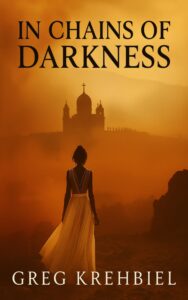 “Don’t judge a book by its cover,” we’re told, but that’s exactly what everyone does. A cover can make or break a book.
I asked both ChatGPT and Grok for advice on the cover art, and asked them to write Midjourney prompts to create an appropriate image. We went back and forth and round about many times, and I even did an A-B split with some friends to get their advice on my two finalists.
Once I had the image I wanted, I used ChatGPT to size it appropriately for the Kindle Direct Publishing specs — for paperback and for Kindle.
In this case, I was all in with AI. I provided the creative direction — with lots of discussion back and forth — but AI actually made the cover.
How to rate all this?
I clearly used AI in the creation of my book, but in very different ways. I wrote 99.8% of it, but AI created the cover. I disclose all of this in the afterward, but should I disclose it in the Amazon description for the benefit of strict “no AI” people?
I’m not opposed to that. In fact, I think we ought to have more disclosure. But as you can see from my experience, it’s not just “used AI” vs. “didn’t use AI.” There are degrees of use, and distinctions to be made. We need some sort of scale, or a way to distinguish the bland and ordinary use of AI (like spell checker) from having Hal write most or all of the work.
The book
I just published the book a week ago. If you’re curious, here’s the link.